Oil & Gas Coating & Repair Services
Refinery and gas-plant repair on turnaround schedules: corrosion under insulation, tube sheets, tank floors, and containment.
AAS in Oil & Gas
In a refinery or gas plant, the failures that shut a unit down are rarely exotic. Corrosion hides under insulation on hot lines until a leak shows up. Tube sheets and water boxes erode and bleed efficiency. Tank floors waste away from the underside where nobody can see them. Containment cracks under chemical exposure. The conventional answer is hot work. That means a permit, a stress-relief cycle, distortion, and a unit out of service long past the OEM lead time. AAS works the other way. We are factory-trained and factory-certified Belzona applicators. We do the hands-on surface prep, repair, coating, and lining in place, on the turnaround schedule you already published. The fixes cure cold, so there is no heat-affected zone and no re-stamping of code vessels. We bring decades on Louisiana units, a safety record that holds up to owner prequalification, and on-call emergency coverage. We are the crew Louisiana refiners, petrochemical producers, and marine operators call when the equipment has to go back in service on time.
Heat exchangers, pumps, and rotating equipment
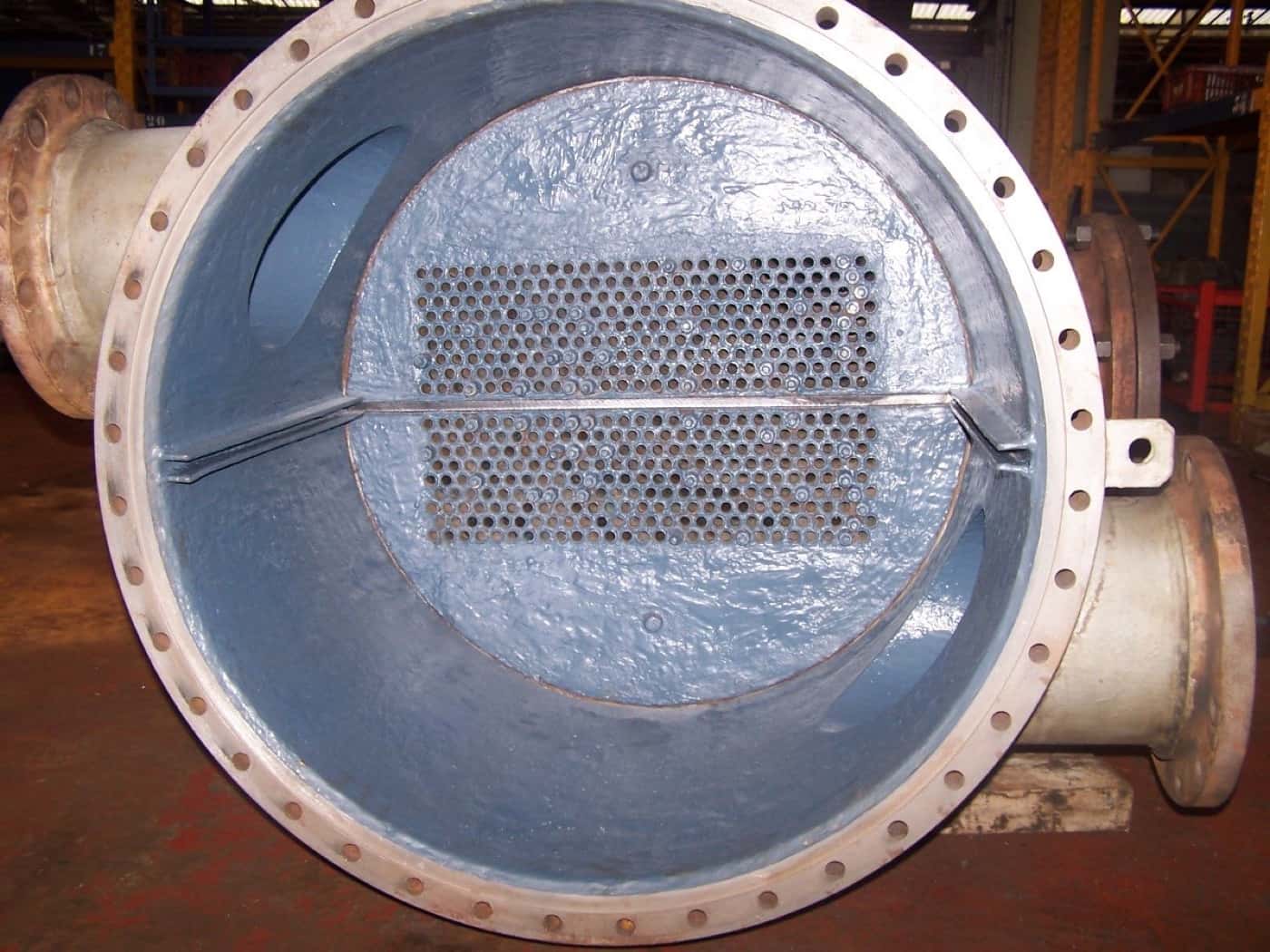
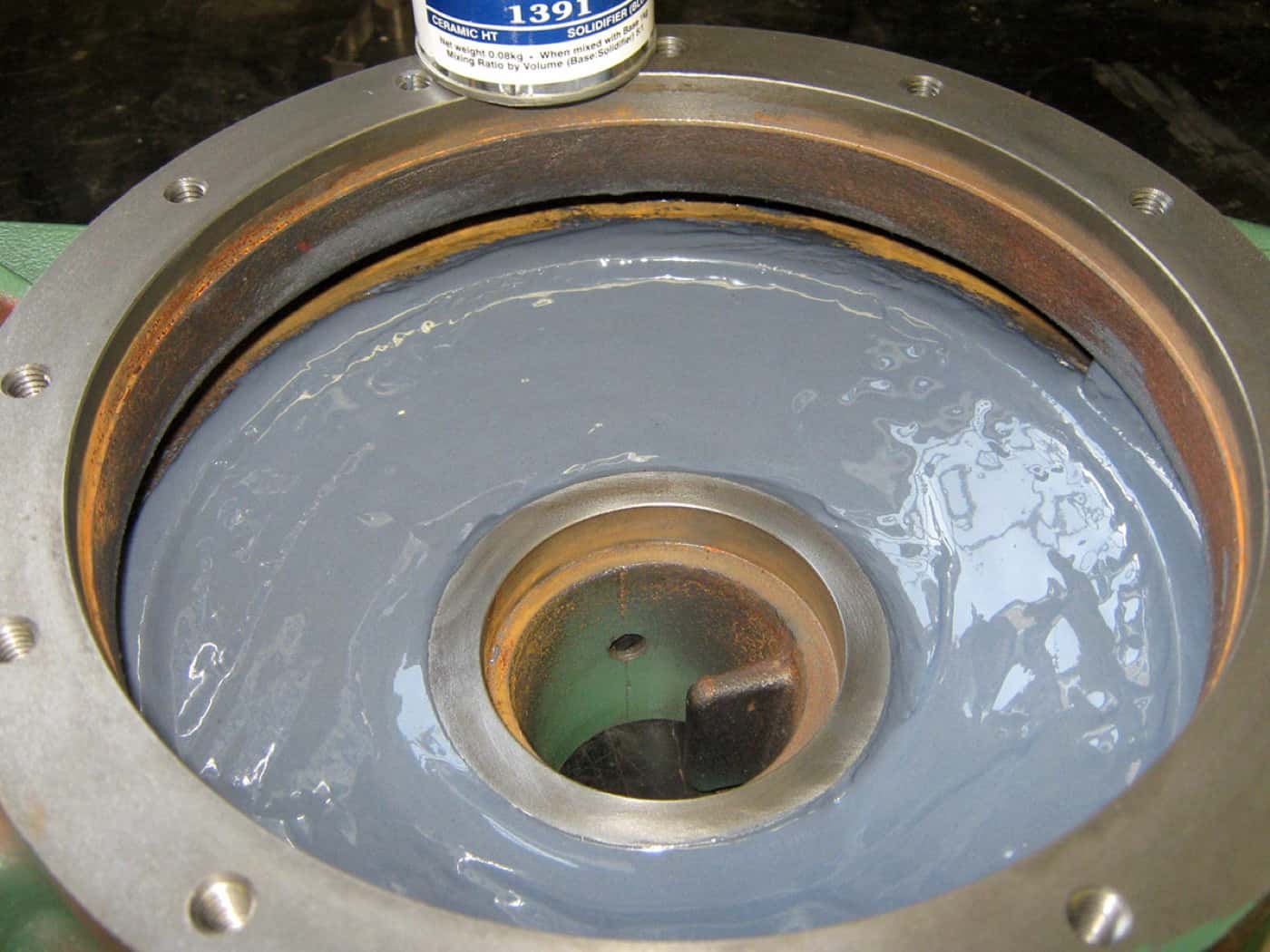
Exchangers lose efficiency two ways. Dissimilar tube metals set up galvanic corrosion at the tube sheet and water box. That eats the steel around every tube end, and the bare metal then attracts more attack. We rebuild and electrically isolate the joint with ceramic-filled epoxies, prep the water box, and recoat it inside the turnaround window. No hot work near the bundle, and the unit returns to service in days rather than weeks. On pumps, erosion-corrosion and cavitation reshape the impeller vanes and casing profile until the pump falls off its head curve. We rebuild the vane geometry and casing wear areas cold, then lay down a smooth coating that restores the hydraulic profile. Efficiency comes back without rebalancing for weld heat.
Valves, shafts, and machinery housings get the same in-place treatment. We rebuild eroded valve bodies and bonnet faces, machine worn journals and keyways back to the specified diameter, and repair compressor and gearbox casings at the bearing bores and split lines. On flange faces, we reform the gasket-witness surface against the mating flange using a release agent. The repaired face mirrors the partner exactly, and the spool never leaves the line.
Piping, flanges, and live leaks
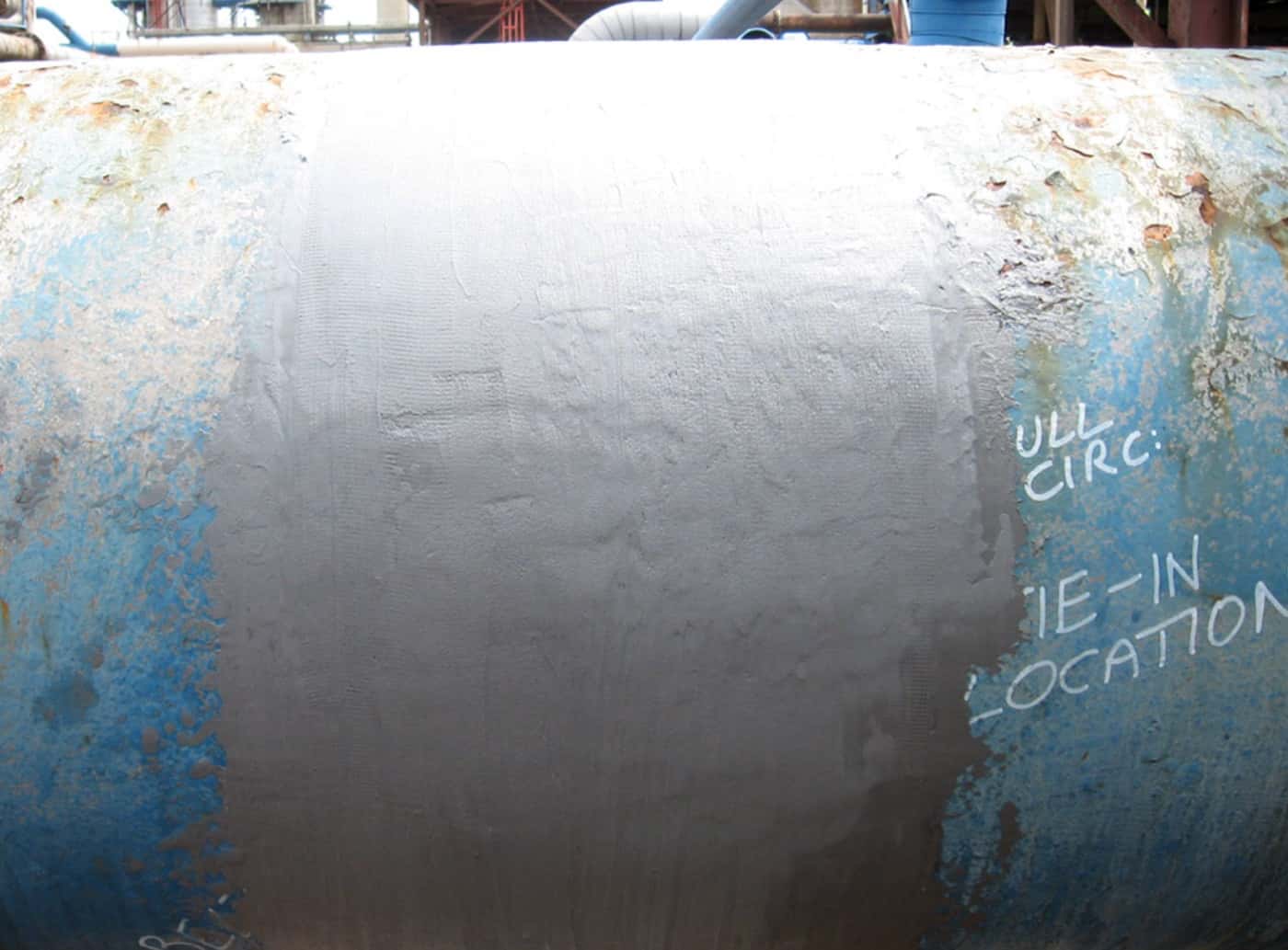
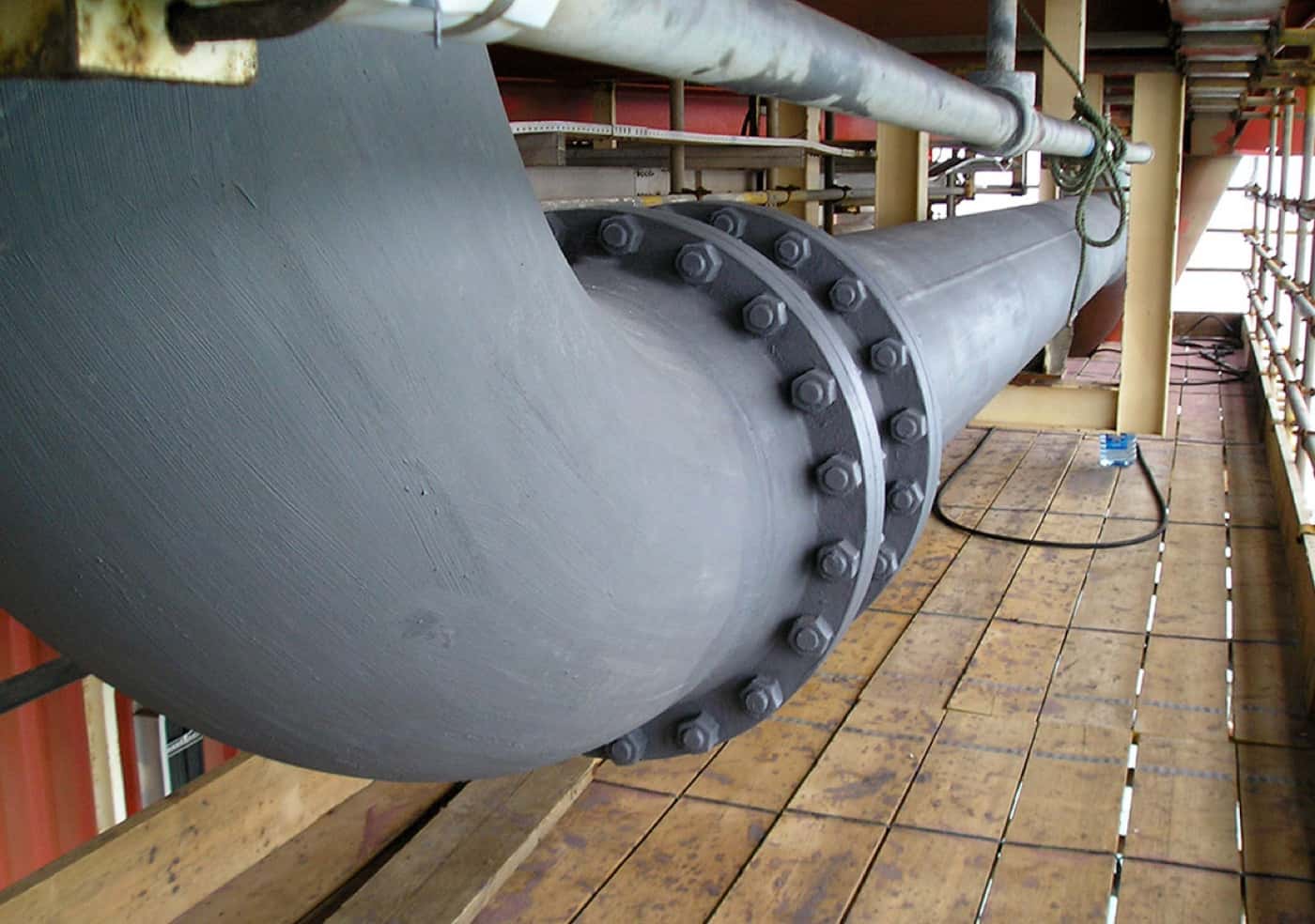
Bends, tees, and elbows wear first. The change of direction concentrates erosion and corrosion right where the flow turns. We line and wrap the contoured fitting with a composite that follows its geometry, so the spool does not get cut out and re-welded. For through-wall corrosion, external pitting, and mechanical damage on pressurized lines, we apply an engineered resin-and-fiber composite wrap while the line stays online. The work is qualified to the recognized composite-repair standards ISO 24817 and ASME PCC-2. The pipe recovers its design pressure rating without a replacement turnaround.
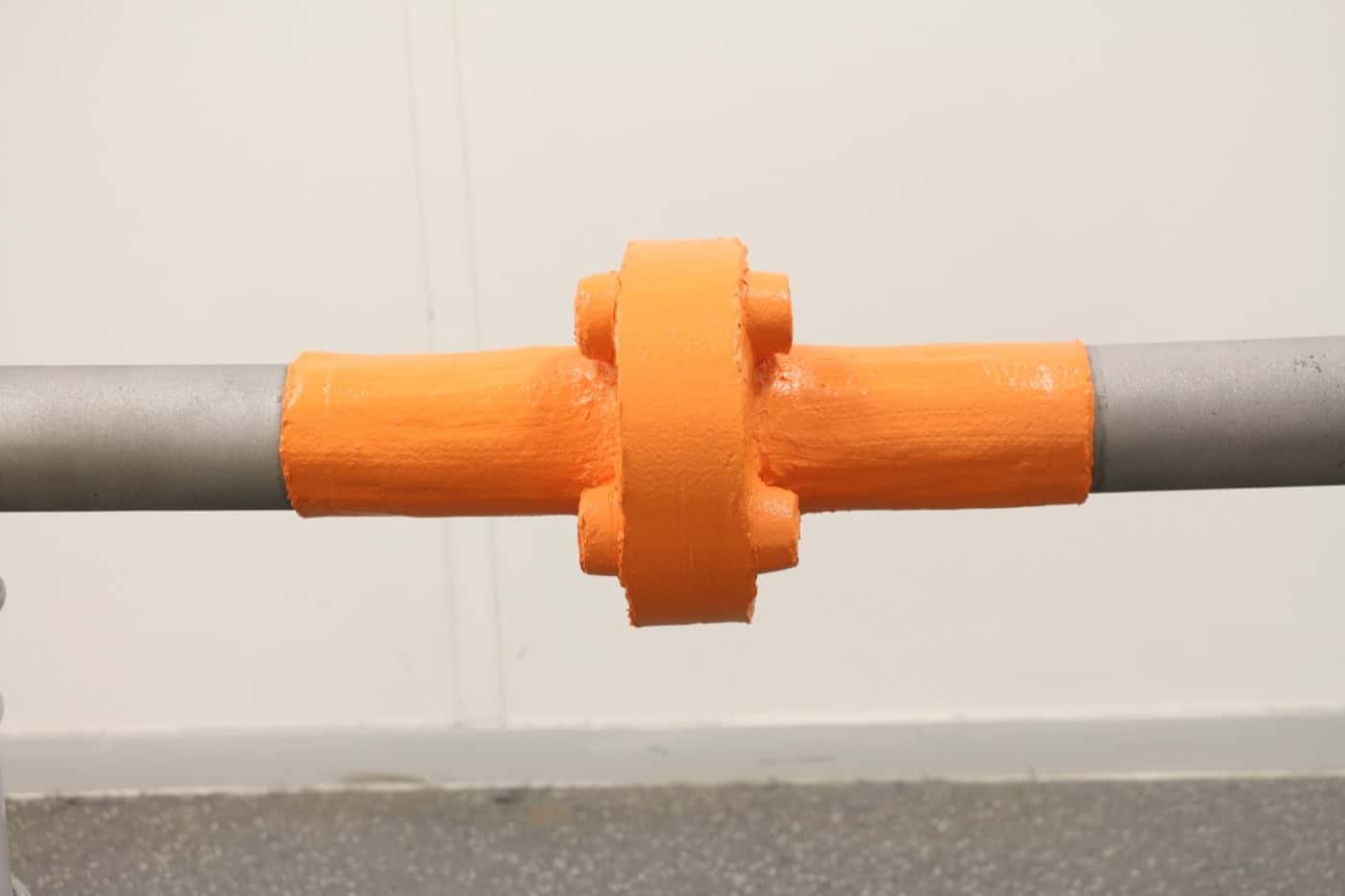
When a line is already weeping, we seal it live. The crew stops the active leak cold while the line stays pressurized, then overwraps for a permanent fix. Production keeps running with no hot-work permit and no product evacuation. Flange joints that corrode and weep at the gasket face get encapsulated in a cold-cure compound that seals the joint and protects the bolting, keeping the assembly free for future disassembly. That live-leak and emergency work is what the on-call line is for.
Tanks, vessels, and containment
Tank floors corrode from the underside. Rainwater wicks in at the steel-to-foundation chime and attacks the floor plate with every wet cycle. We seal that chime with a flexible cold-applied coating and reinforce the inside rim during the routine inspection window. Inside the tank, stored product thins the floor and the floor-to-shell weld where stagnant material settles. We apply a cold-cure lining as one continuous film over the prepared interior. There are no welds to recoat and no heat soak. Separators, knock-out drums, and process vessels that corrode at the water leg, welds, and access ports get the same in-place lining matched to their service.
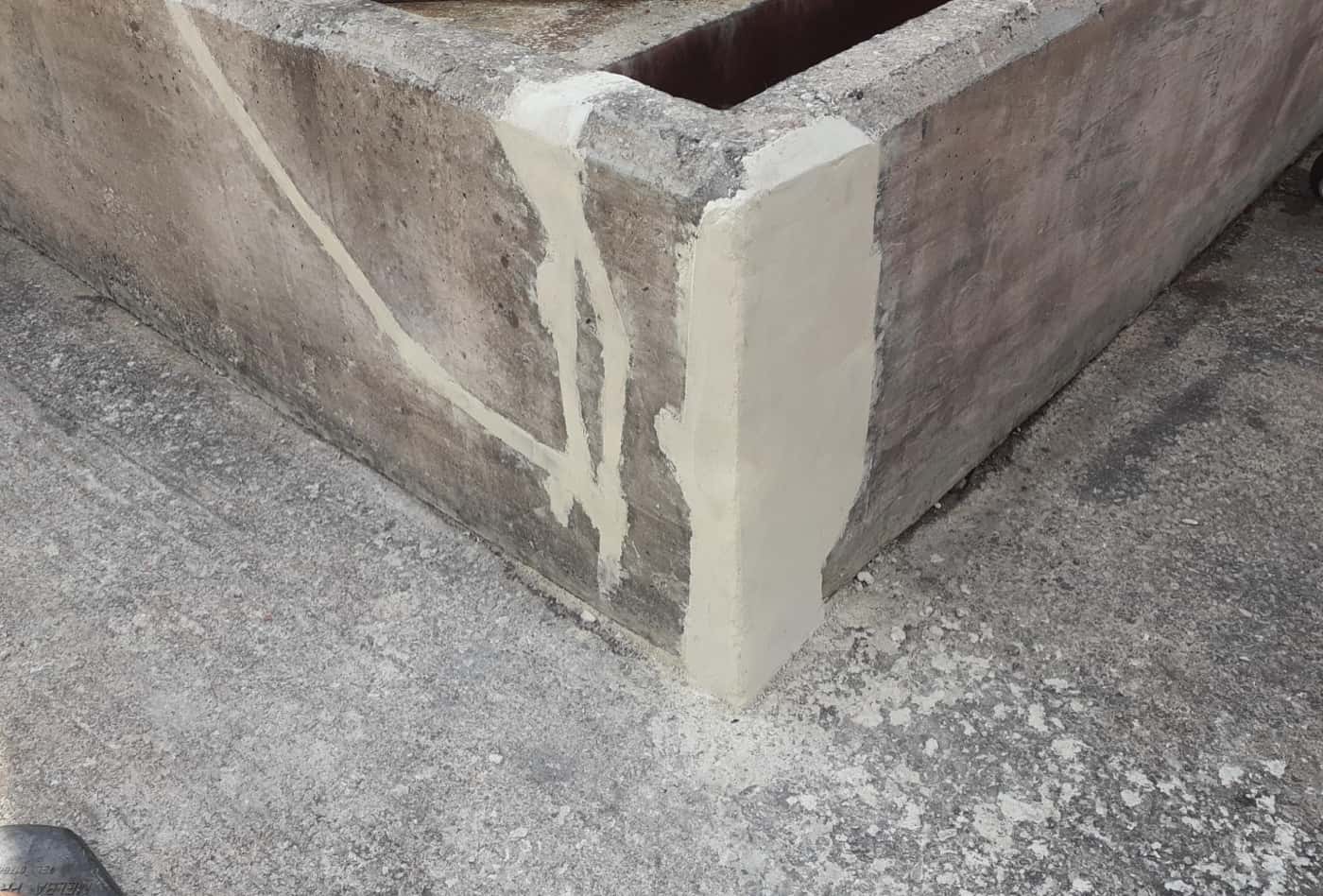
Containment is the other half of the job. Bund walls spall from the inside out and open cold-joint cracks until they no longer hold their rated volume. We rebuild the spalled face, cap it with a barrier coating, and add a chemical-resistant overlay where the spill chemistry demands it. The facility holds the volume its SPCC plan requires without demolition and recast.
Hot service, corrosion under insulation, and outcomes
Corrosion under insulation is the failure this sector fights hardest. Wet insulation traps moisture against a hot wall, and inspectors only find the metal loss once it is severe. We brush a barrier coating onto the hot surface under the insulation while the line stays in service, and it protects the steel across the CUI temperature band. Where cladding leaks at seams, support legs, and penetrations, we seal the jacketing with a reinforced membrane and weather-side coating so water never reaches the pipe. Vessels and pipework that cannot be cooled or drained get coated in place with high-temperature linings that cure on the operating surface, so the asset keeps running.
Every one of these repairs is built around one outcome. The equipment goes back in service inside the outage you already scheduled. Cold-cure work means no permit-driven hot work, no re-stamping of code vessels, and no waiting on OEM lead times. The crew preps, repairs, and coats in the field and finishes the rest in our climate-controlled shop. For Louisiana refiners, petrochemical producers, and marine operators, that is downtime avoided and a turnaround that lands on its dates.
How AAS approaches it
The failures we see in Oil & Gas
These are the recurring problems across oil & gas plants. AAS addresses each in place, on turnaround schedules.
Capabilities used in Oil & Gas
The repair and protection work AAS performs most across this sector. Each links to the full capability.
Leak Sealing & Composite Pipe Repair
Live-leak sealing and engineered composite wrap repair of pipe and equipment, in service, without hot work.
- Seal many leaks while the line stays in service.
- Reinforce corroded and holed pipe with engineered composite wraps.
- Avoid hot work, isolation, and the downtime they require.
Corrosion Protection & Coatings
Long-term barrier and immersion coatings for metal in corrosive, immersed, buried, and splash-zone service.
- Protect metal in immersed, buried, and splash-zone service.
- Coat complex geometries that are hard to protect by other means.
Metal Repair & Rebuilding
Worn, corroded, and damaged metal rebuilt to working dimensions in place, without replacement lead times.
- Rebuild worn and corroded metal in place, without replacement lead times.
- Restore equipment to working tolerances and efficiency.
Tank Linings, Process Vessels & Storage Tanks
Cold-applied internal and external linings for storage tanks, process vessels, and secondary containment, installed in place without hot work for chemical and immersion service.
- Line storage tanks inside and out for corrosive and immersion service.
- Reline process vessels, drums, digesters, and towers in place.
High-Temperature Coatings
In-situ external protection of hot pipework and equipment, including corrosion under insulation mitigation.
- Coat hot pipework and equipment while it stays in service.
- Mitigate corrosion under insulation on heated lines.
Work AAS performs here
Bolted and threaded assemblies on hot equipment seize together, so the next overhaul means cutting parts free instead of unfastening them.
Learn more →Anti-slip walkways and access surfacesWorn aggregate, oil tracking, and process spills drop floors, stairs, and walkways below safe slip resistance and raise fall risk.
Learn more →Atmospheric corrosion protectionAirborne moisture, salts, and humidity corrode exposed equipment and new machinery before the original coating lasts a full service interval.
Learn more →Bund wall rebuild and liningBund walls spall from the inside out, exposing rebar and opening cold-joint cracks until the wall no longer holds its rated volume.
Learn more →Chemical storage tank liningsStored chemicals attack tank floors and the floor-to-shell weld, thinning steel where stagnant product settles and the old lining has worn through.
Learn more →Composite repair of pipe bends, tees, and elbowsBends, tees, and elbows wear fastest because flow turbulence concentrates erosion and corrosion at the change of direction.
Learn more →Compressor, engine and gearbox casing repairBearing-bore wear, split-line distortion and oil-leak paths at gasket faces retire compressor, engine and gearbox housings before the internals wear out.
Learn more →Corrosion under insulation preventionWet insulation traps moisture against hot pipe and vessel walls, driving hidden corrosion that inspectors only find once metal loss is severe.
Learn more →Crack and hole repair on casings and equipmentWelding on pressure separators and code-stamped vessels triggers re-stamping, stress relief and thermal distortion that can cost more than the defect.
Learn more →Cyclone and separator erosion protectionSwirling particle-laden gas inside cyclones and separators erodes the cone walls and vortex finders until plate thins and capture efficiency drops.
Learn more →Engineered composite pipe wrap repairThrough-wall corrosion, external pitting, and mechanical damage thin pressurized pipes and vessels before a replacement turnaround is scheduled.
Learn more →External pipework and tank corrosion protectionExternal corrosion attacks pipework, valves, fittings, and tank walls at supports, weld seams, and coating gaps until metal loss hits inspection limits.
Learn more →Flange encapsulation and sealingFlange faces corrode and weep at the gasket joint, and exposed bolting seizes. This opens leak paths and makes future disassembly hard.
Learn more →General metal-loss rebuilding compositesMetal loss from corrosion, erosion or pitting retires equipment once it reaches a code-trigger thickness, and weld build-up adds heat distortion.
Learn more →Handrail anchor and fixture re-bondingCorroded or pulled-out handrail anchors and loose fixtures create fall hazards on stairs, walkways, and platforms where the socket has rusted out.
Learn more →Heat exchanger, tube sheet and water box repairDissimilar tube metals set up galvanic corrosion at the tube sheet and water box, attacking the steel around each tube end and opening leak paths.
Learn more →High-temperature equipment liningEquipment running well above ambient strips standard immersion linings, exposing bare steel to corrosion and process attack.
Learn more →Hot vessel and pipework in-situ coatingTanks, vessels, and pipework running hot cannot be cooled or drained, so conventional linings that need an ambient substrate never get applied.
Learn more →Insulation jacketing and lagseal protectionInsulation cladding leaks at seams, support legs, and penetrations, letting water reach the pipe and hide active corrosion under the lagging.
Learn more →Live leak sealingActive leaks at pipes, headers, and vessels waste product and corrode nearby steel before a shutdown can be scheduled.
Learn more →Low-friction pipe support linersPipes sliding across steel supports grind through coatings and trap moisture, driving corrosion and metal loss at every contact point.
Learn more →Machine base grouting and chockingVoids, distortion, and gaps under machine feet and pump bases feed vibration and misalignment back into rotating equipment.
Learn more →Machinery shimming and equipment reseatingSteel shims leave point contact under machine feet, so load transfers unevenly and equipment drifts out of alignment under load.
Learn more →Oil and transformer leak sealingOil leaks at transformer tanks, gearbox cases, and weld seams persist because the oil film stops conventional adhesives from setting.
Learn more →On-site flange face and nozzle insert repairHeat cycling, gasket-witness machining and dropped tools deform flange faces and corrode nozzle sleeves, so the line leaks and stays out of service.
Learn more →Pipe and tank leak sealingPinholes, through-wall defects, and corrosion pits open leak paths in pipe and tank walls, often on wet or oil-contaminated steel.
Learn more →Plain bearing, bushing and bearing-housing repairWorn bearing bores, fretted bushing seats and vibration-loosened housings shift the rotating axis and shorten coupling and seal life.
Learn more →Process vessel and drum liningsProcess vessels, knock-out drums, and clarifiers corrode at welds and access ports where the product chemistry thins the original liner.
Learn more →Pump impeller and casing rebuildingErosion-corrosion and cavitation reshape impeller vanes and casing profiles, pulling the pump off its head curve and cutting efficiency.
Learn more →Rotating equipment repair and efficiency restorationFlow-induced metal loss exposes fresh steel that the process chemistry then attacks, dropping the efficiency of pumps, fans and turbines.
Learn more →Secondary and chemical containment liningPorous concrete and cracked joints let spilled acid, alkali, or process product travel through the bund and reach surrounding soil.
Learn more →Separator vessel liningOil, gas, and water separators corrode at the water leg and internals where produced water and solids settle against the shell.
Learn more →Splash-zone, immersed, and underwater corrosion protectionTidal wetting, full immersion, and underwater exposure corrode marine and offshore steel faster than topside surfaces, attacking piles and risers.
Learn more →Structural metal bonding and component castingWelding to join or fabricate metal components introduces heat distortion, and catalog parts rarely match the dimension a worn assembly actually needs.
Learn more →Tank base sealing and water-ingress preventionWater wicks in at the tank-to-foundation rim and attacks the floor plate from beneath, accelerating underside corrosion with every rain cycle.
Learn more →Valve body restorationBody erosion at the flow path, seat-and-stem wear and gasket-face corrosion retire valves before the trim or actuator fails.
Learn more →Worn shaft, journal and keyway rebuildingKeyway hammering, journal scoring and worn shaft seats leave the press-fit oversized and the journal undersized for its sleeve.
Learn more →Have equipment that needs to stay in service?
Tell us what is failing. We respond quickly, and we offer 24-hour on-call service.